The Inventor's Notebook #29
A Case for Wine
Karl Rabe
Bill and I perform the multiplying bottles in a routine I call "The Bottle and Glass Trick?". Anyone that performs a traditional multiplying bottle routine knows that one of the challenges as the stage management of the bottles before and especially after you perform the effect.
One commercial product available to solve this problem is the "Multiplying Bottle Tray" by Joe Lefler. As illustrated the tray has a layer with holes that can be lifted up to encase the bottles and keep them from tipping. In this way the bottles can be lifted away or moved without fear of them tipping over. This is a clever solution, but I didn't like the idea of having to work around the holes during the performance. Instead I wanted to create an "organic" holder that looked like a wine crate.
-

- Lefler Tray
-

- For Transport
My first attempt was simply made with a trip to Total Wines to sort through their empty wine boxes available at the store. I found one of suitable size and then with some wood grain contact paper and some gaffer's tape, made a folding crate. This worked but had a few shortcomings.
- The crate folded flat but was very long when folded.
- The crate did not have sides tall enough to completely cover the bottles.
- There was no tray, so the entire table had to be moved about on stage.
- The bottles were still exposed to prying eyes backstage.
If you want to build one of these, it is very easy. The box is bottomless. Notice the dividers are free floating and only are fastened to the outside box at one point. This ensure it can freely fold with minimal fuss.
To use, the props are all in starting position with the box keeping everything in its place. I use a small cloth to cover the protruding bottles. To perform the box is simply lifted over everything and set aside. Once the performance is complete a few minor adjustments are made to the bottles on the table and than the box is carefully placed over the standing bottles and the entire table can be moved without fear of the bottles tipping.
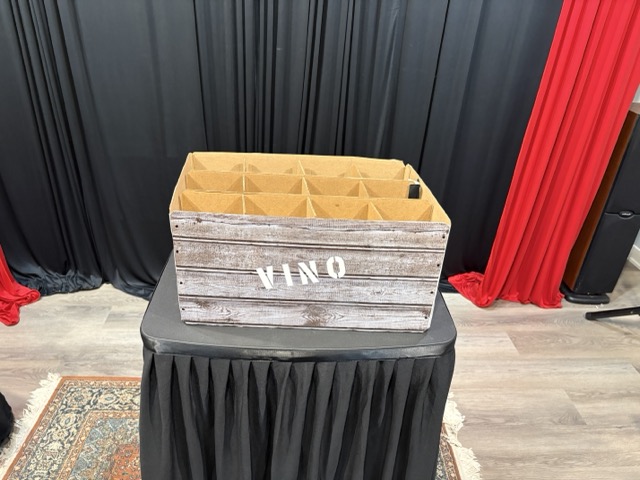
Rev 1
-
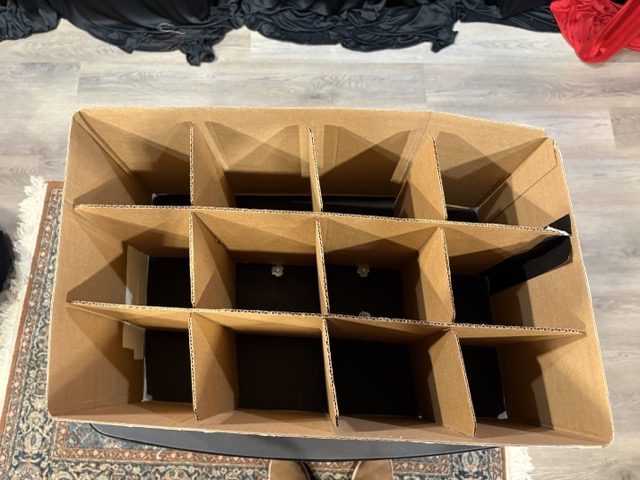
- Top view
-
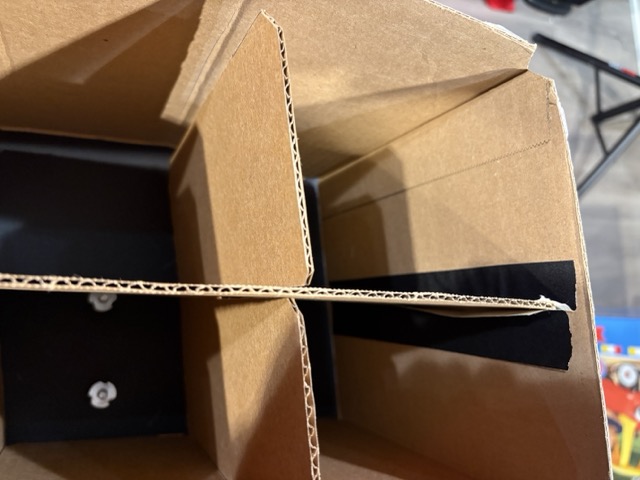
- Detail of Hinge
-
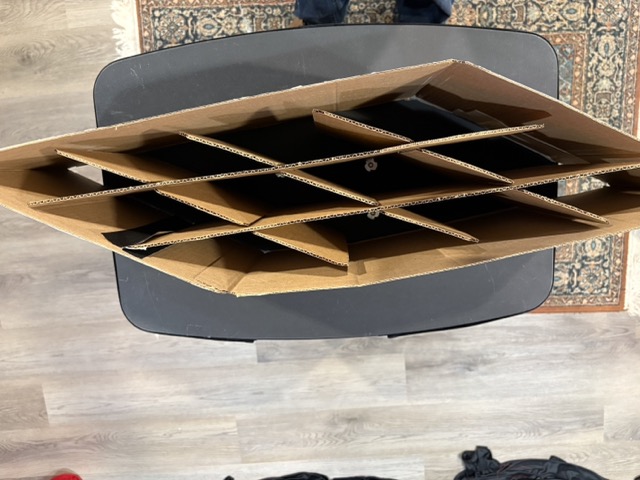
- Partially Folded
-
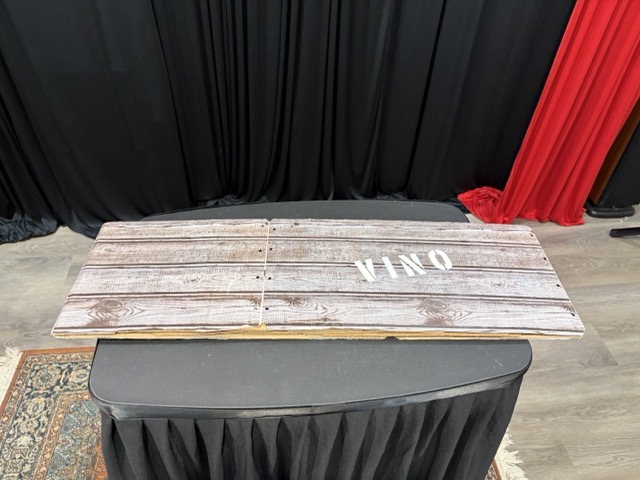
- Fully Folded
Building on lessons learned, Rev 2 was significantly improved.
- The box is built out of corrugated plastic and contact paper with Gaffers's tape for assembly.
- Lightweight nylon trim tape forms the netting inside for dividers and doesn't get in the way of folding.
- Dimensions are key. The box is as deep as it is tall. This way the lid can fold back and when collapsed it occupies the exact same space as the tray.
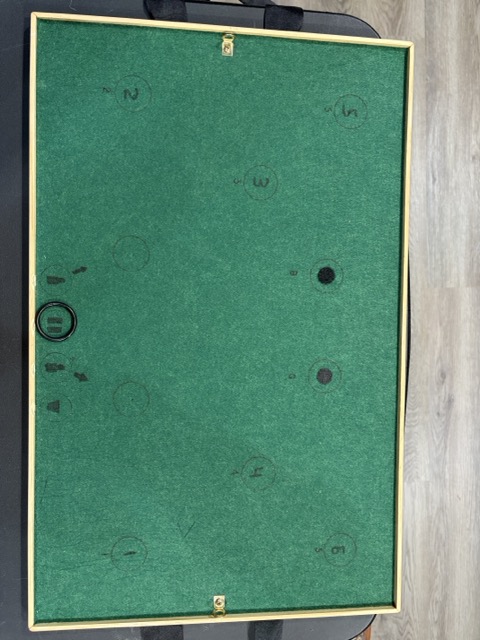
- I built a light weight tray for the bottles to sit on out of 1/8 in plywood and outside corner molding. The tray is marked with my bottle placement for the routine. I also have visual cues for Bill to know what bottle to lift when. I move a small ring to prompt him for the next step in the routine.
- The tray has two small brass keepers on the ends to keep the box unfolded fully when on the tray. It also has two nylon tape handles for lifting.
- The sides of the box fold in, so it doesn't get any longer when folded.
- The box has a lid and is tall enough to completely encase the bottles. This keeps the props hidden before and after performing.
- Handles on the side let you lift the tray and box together and move it around back stage.
- A small bungee locks everything together when folded for transport.
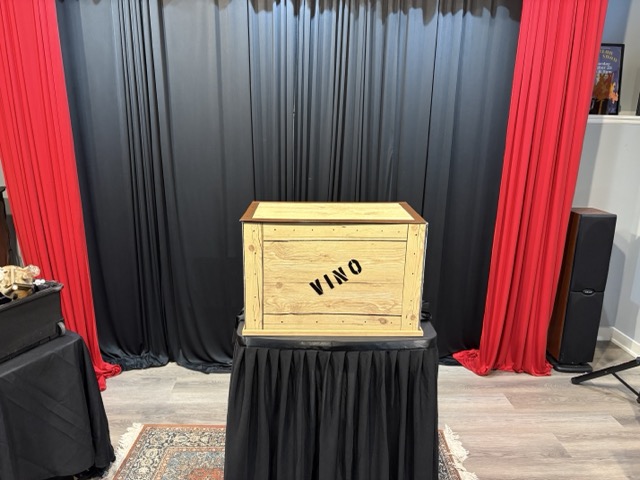
Rev 2
-
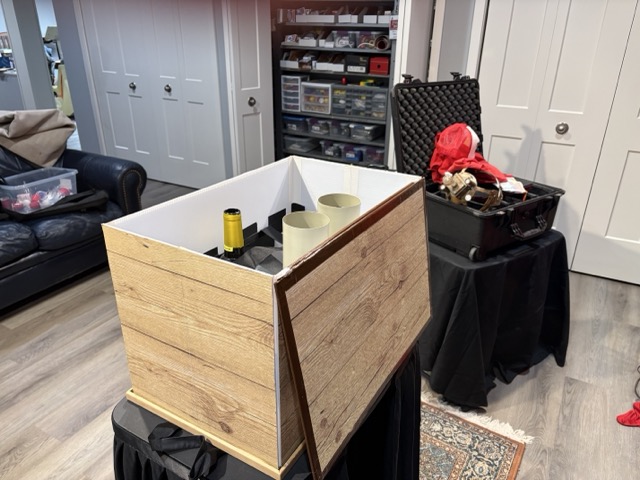
- Ready to perform
-
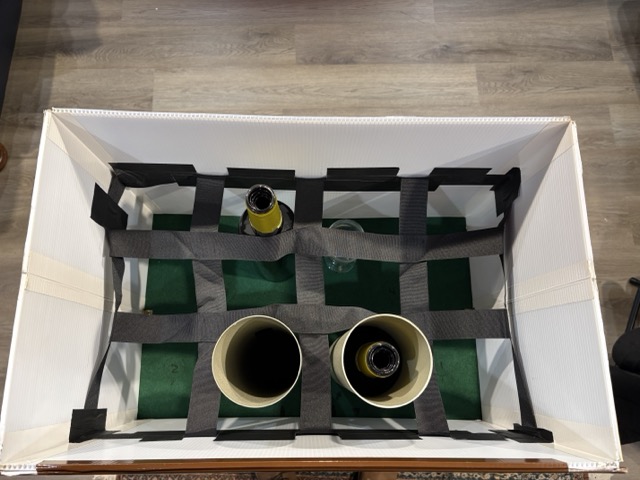
- Netting Contains Props
-
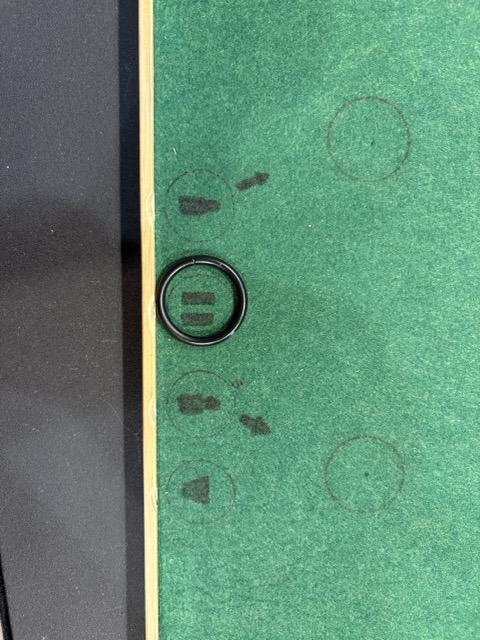
- Cues Closeup
-
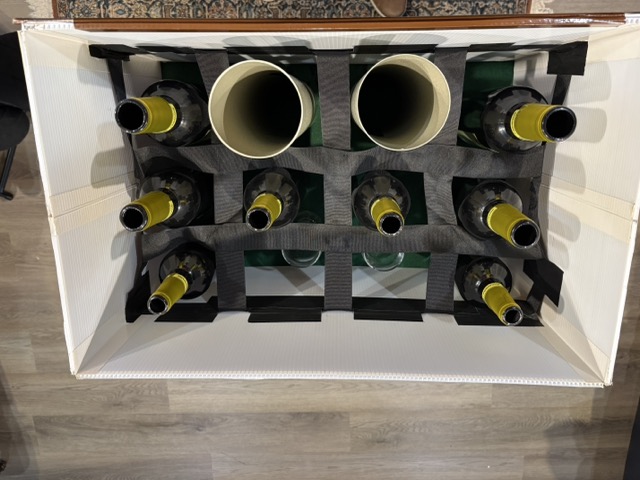
- After Performing
-
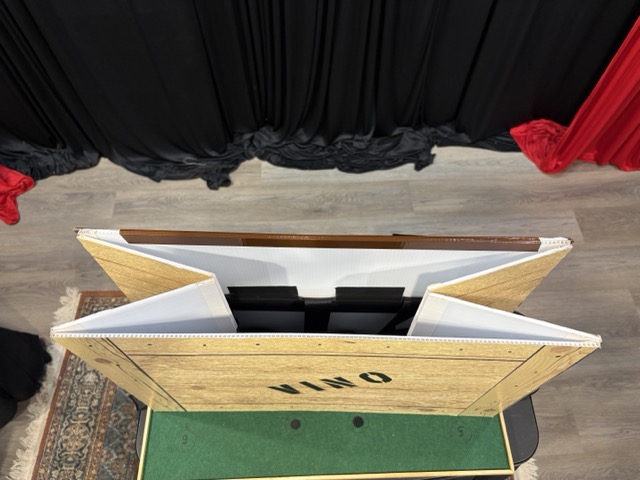
- Sides Fold In
-
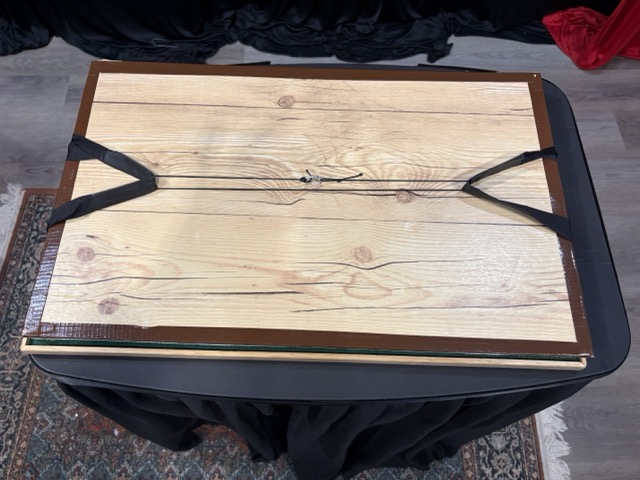
- Fully Folded for Transport
-
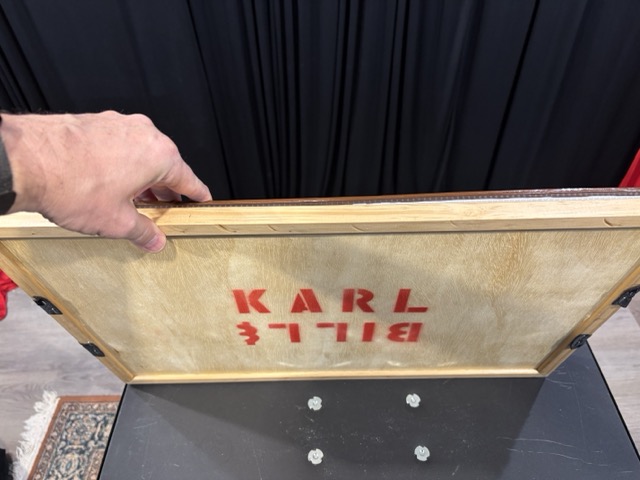
- Lightweight Tray
We used this case when we performed in Abbott's Stage Competition and took Second Place.

What props do you have that are difficult to manage?